HUANG XUEBIN
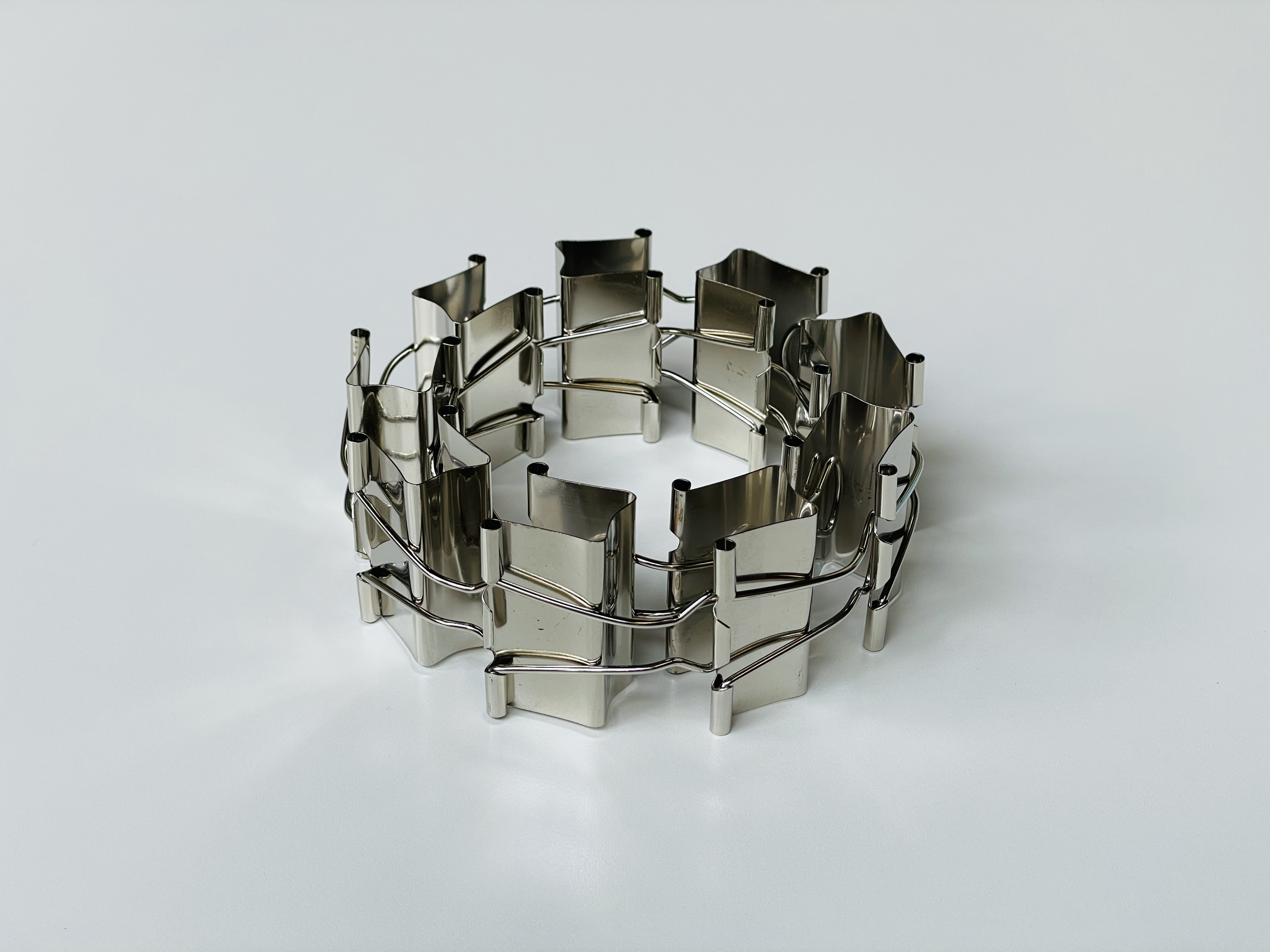
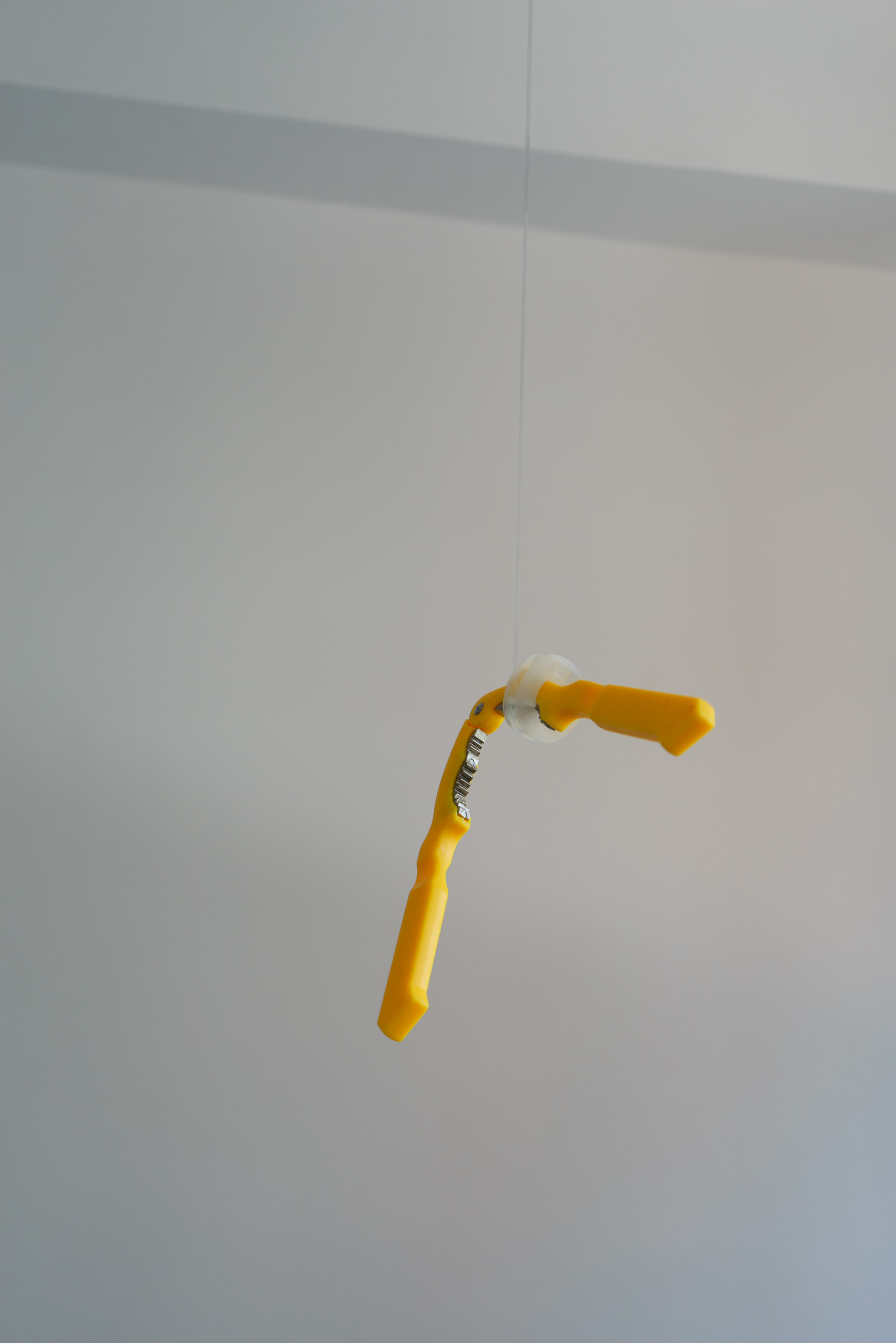
SKU #004 · The Ring of Mutual Filing · 2025 · Binder clips · 11.5 × 11.5 × 4 cm
Binder clips are clipped end to end, each gripping the tail handle of the next, which in turn grips the one after it, until they close into a ring. Every clip is performing its function of “clamping” while at the same time being held fast by another, unable to truly release. The ring holds no documents, no center, nothing being organized — only a set of clamping commands executing upon one another. It is like a closed loop of an office workflow: every node is working, yet nothing ever gets done.
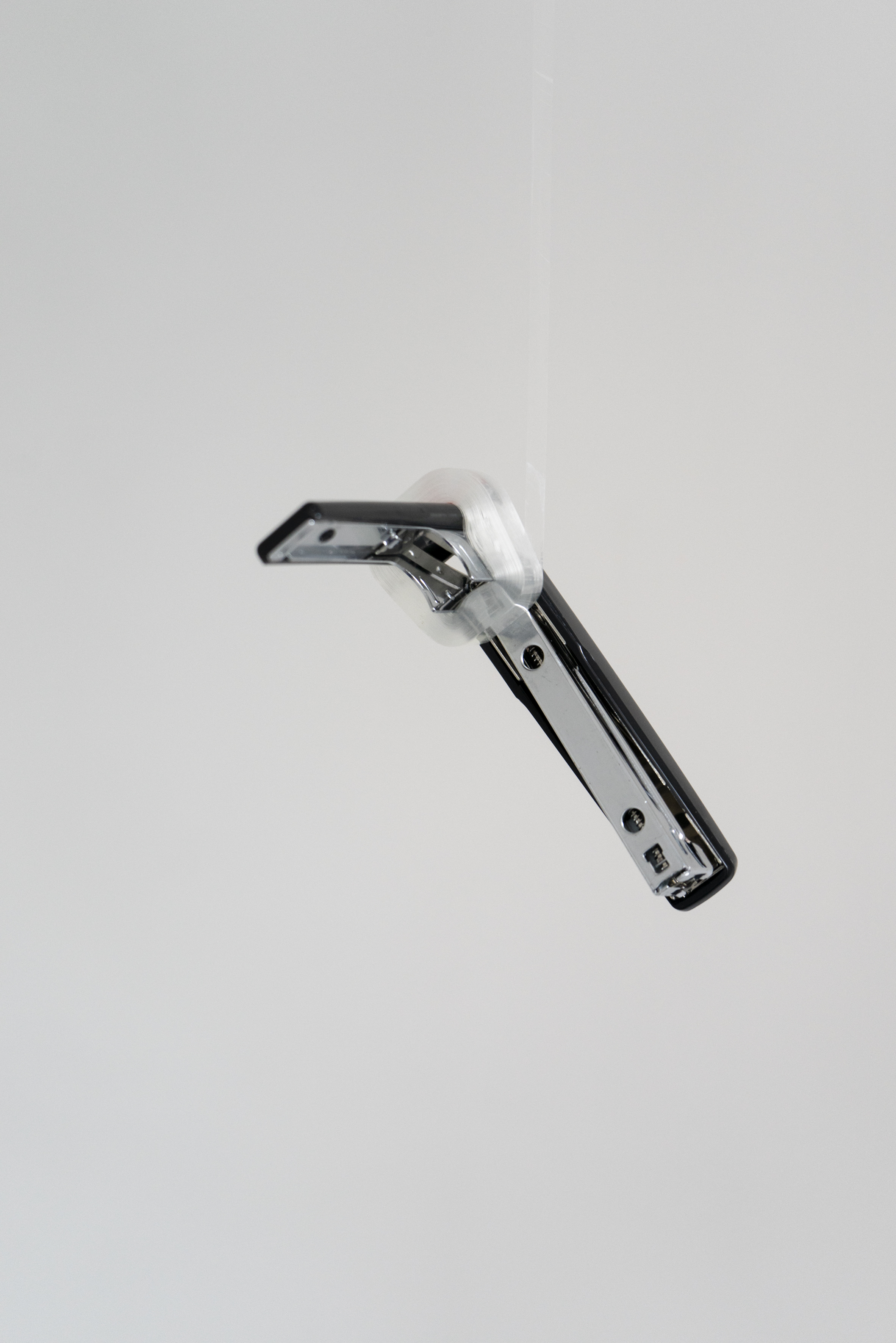
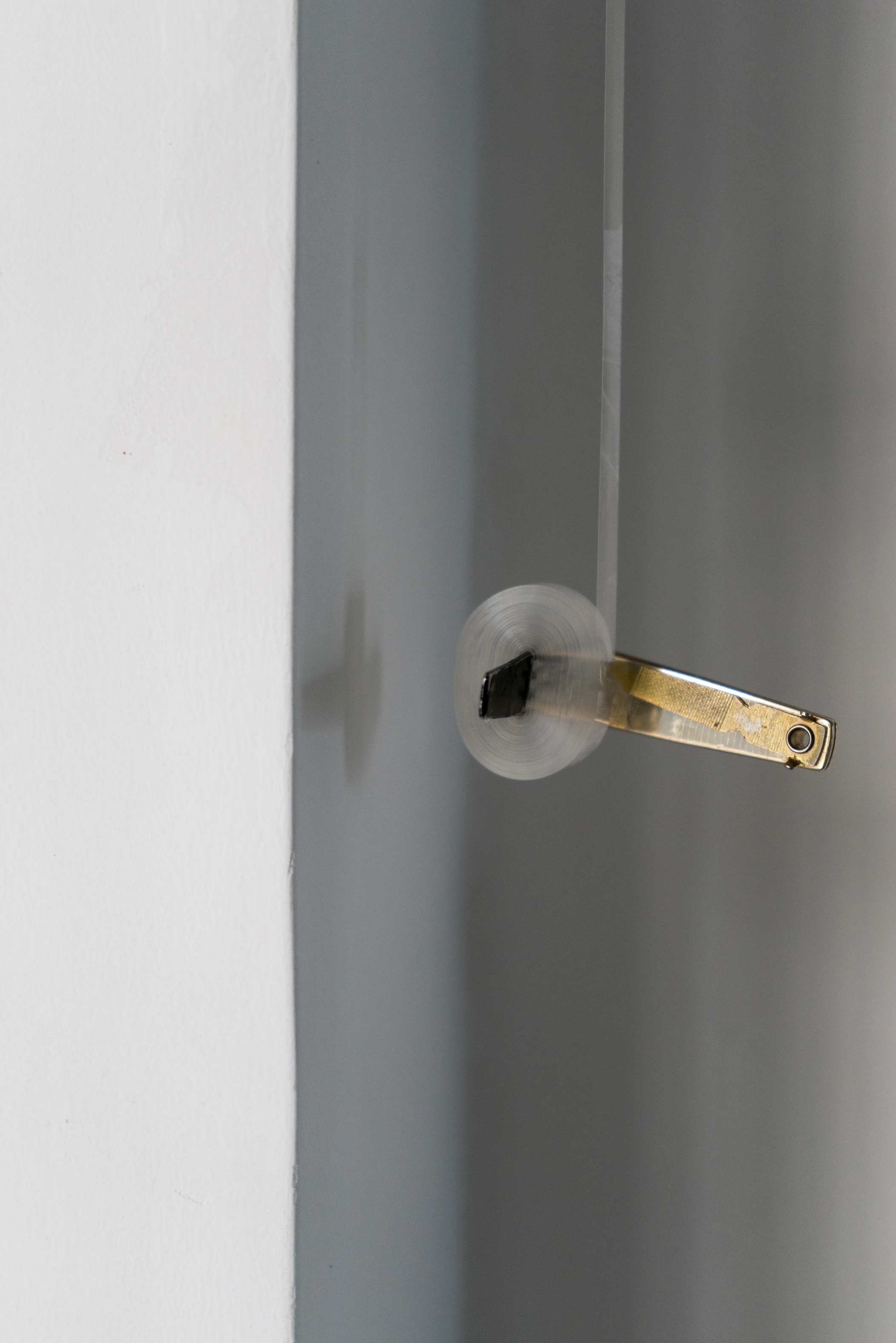
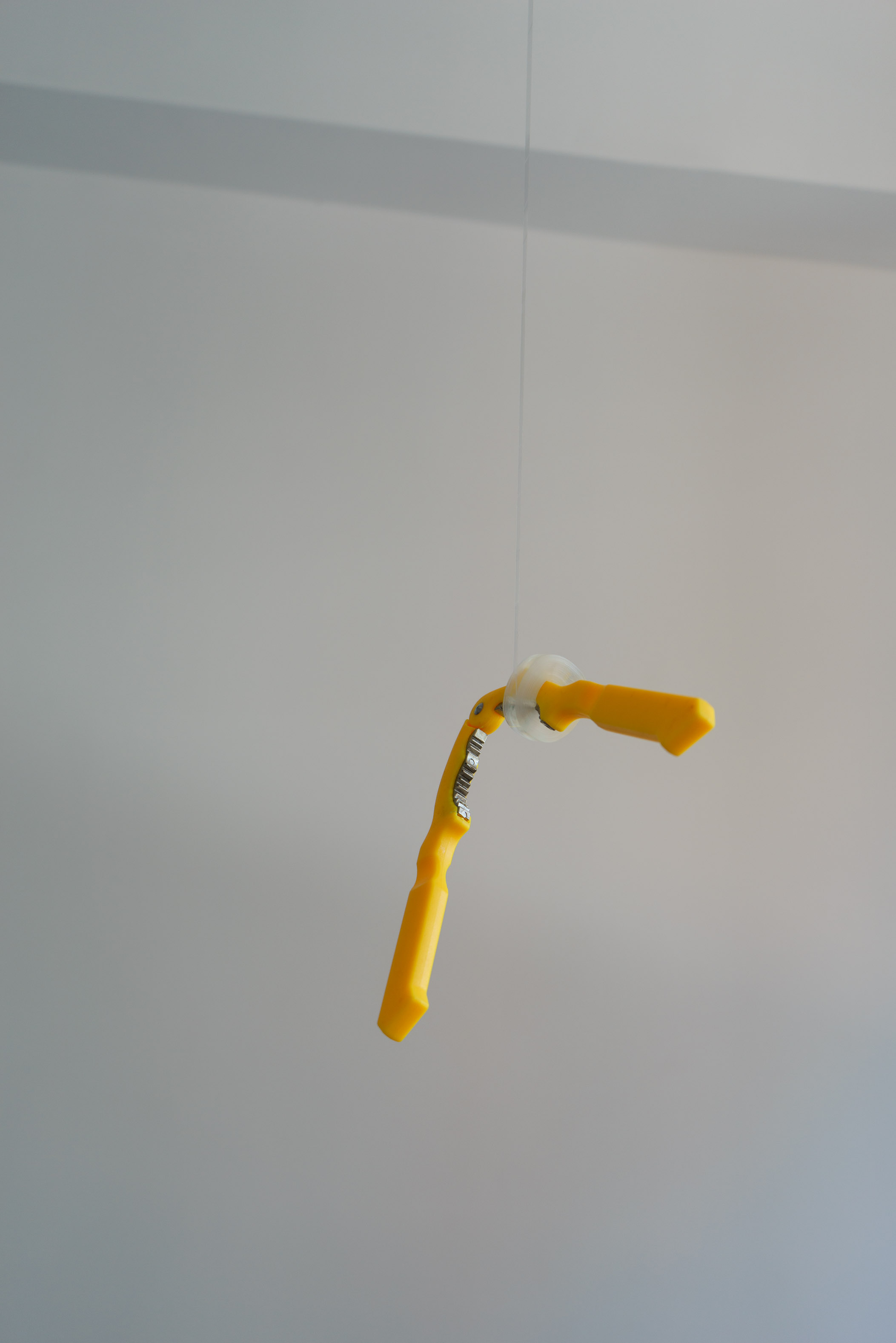

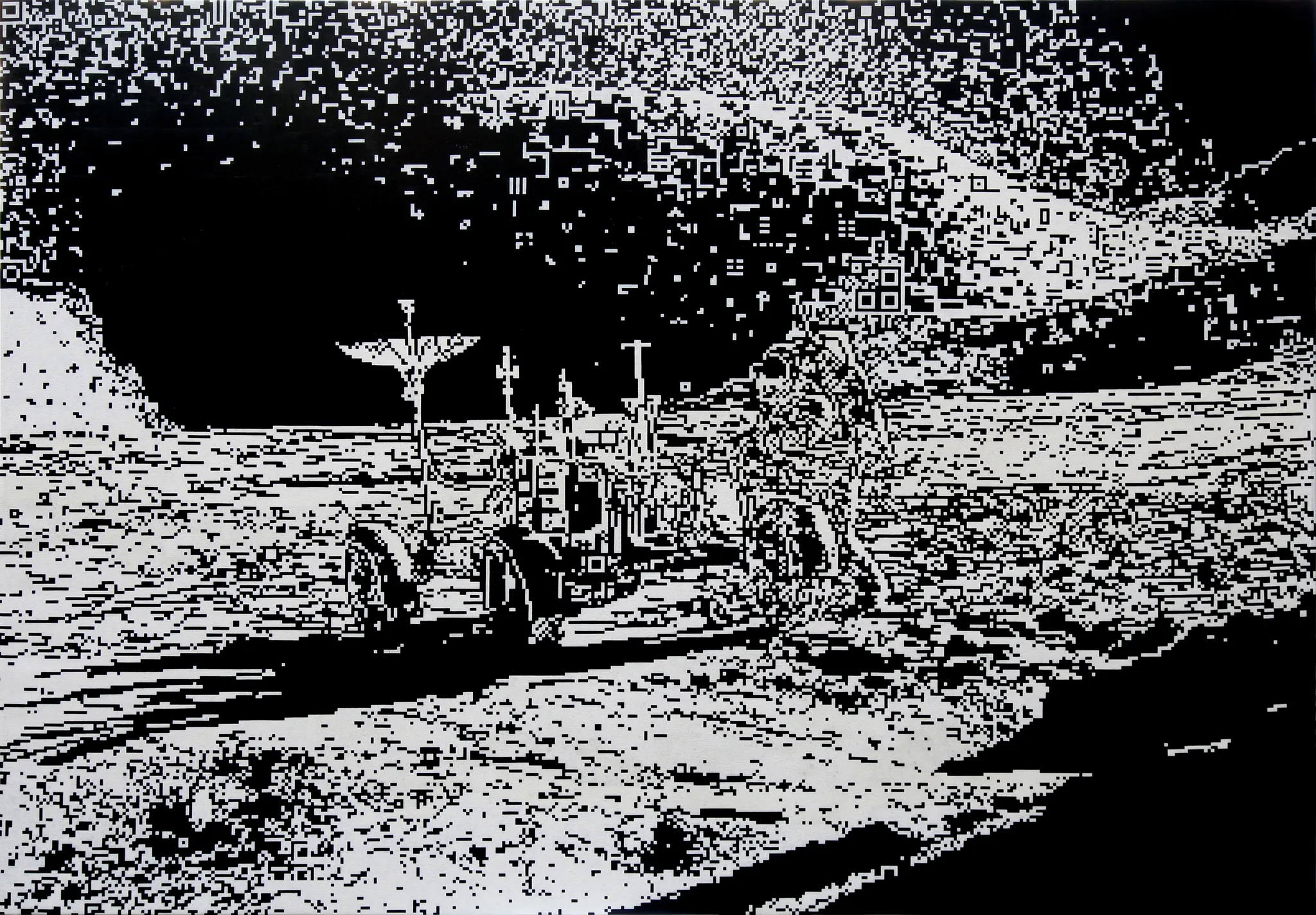
From the irrational number π (3.14159…), the digits up to the 353rd decimal place are taken and reversed in order, producing the string “9876…95141.3”. This string is rendered as a silent film: its opening segment (“9876…”) serves as the title sequence, and its closing segment (“95141.3”) as the credits, while the middle scrolls at a continuously varying speed — slowing, accelerating, slowing again. Only after the “film” has ended can a viewer, drawing on their own experience, read the closing “95141.3” backwards as the opening of π — and realise that what they have just witnessed is a local fragment of π, a hyperobject: a totality too vast to be perceived in a single act of viewing.
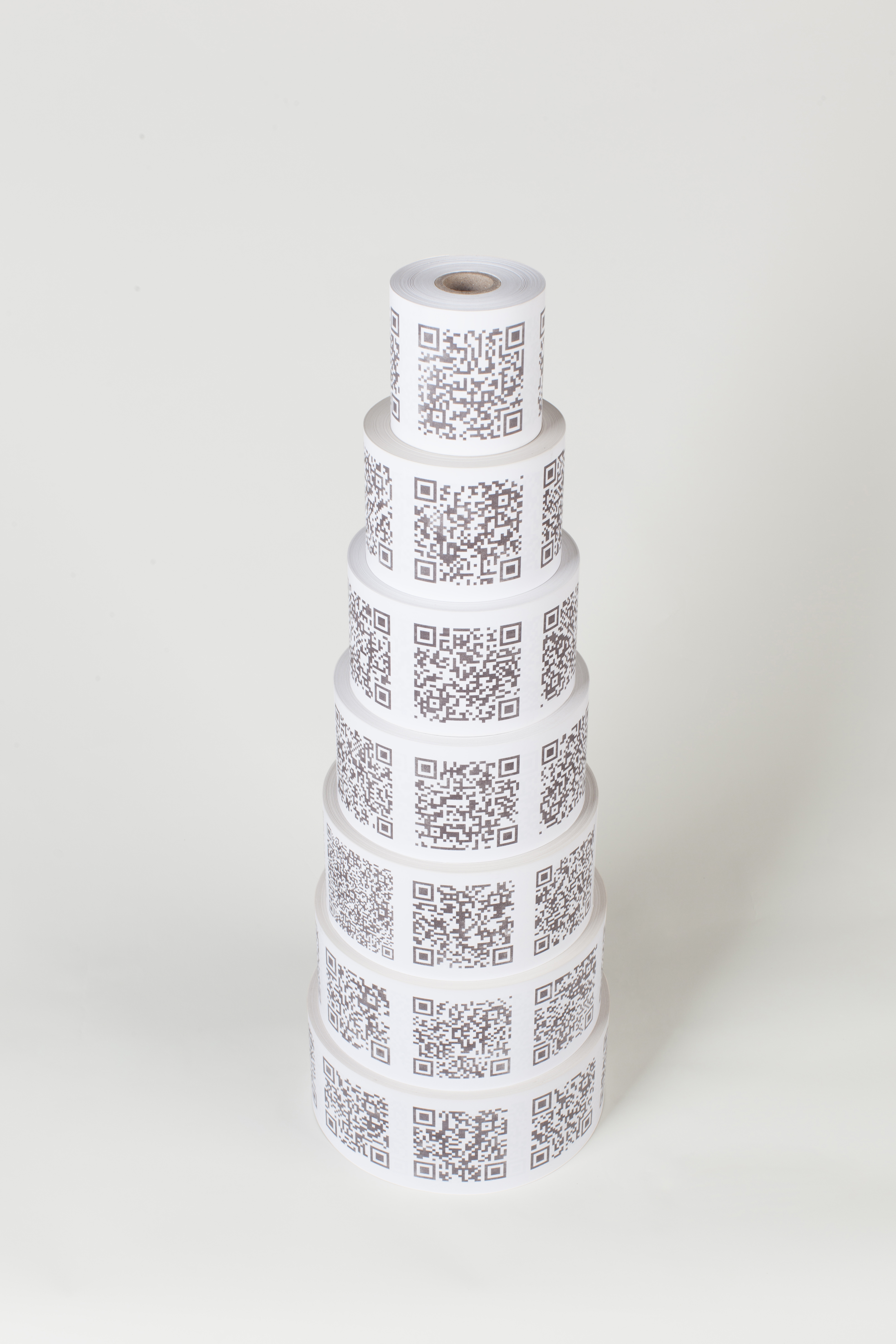
Genesis 11 recounts how humankind united to build a tower that might reach heaven. Seeing this, the LORD confounded their speech so that they could no longer understand one another — and the desire to ascend was thereby suppressed.
For this work, thermal paper is used to print QR codes that lead to websites whose IP addresses have been blocked or poisoned (DNS poisoning). Each printed code is a tower that cannot be climbed: where God once scrambled language to halt the ascent, today it is the manipulation of IP addresses that scrambles access and halts entry.
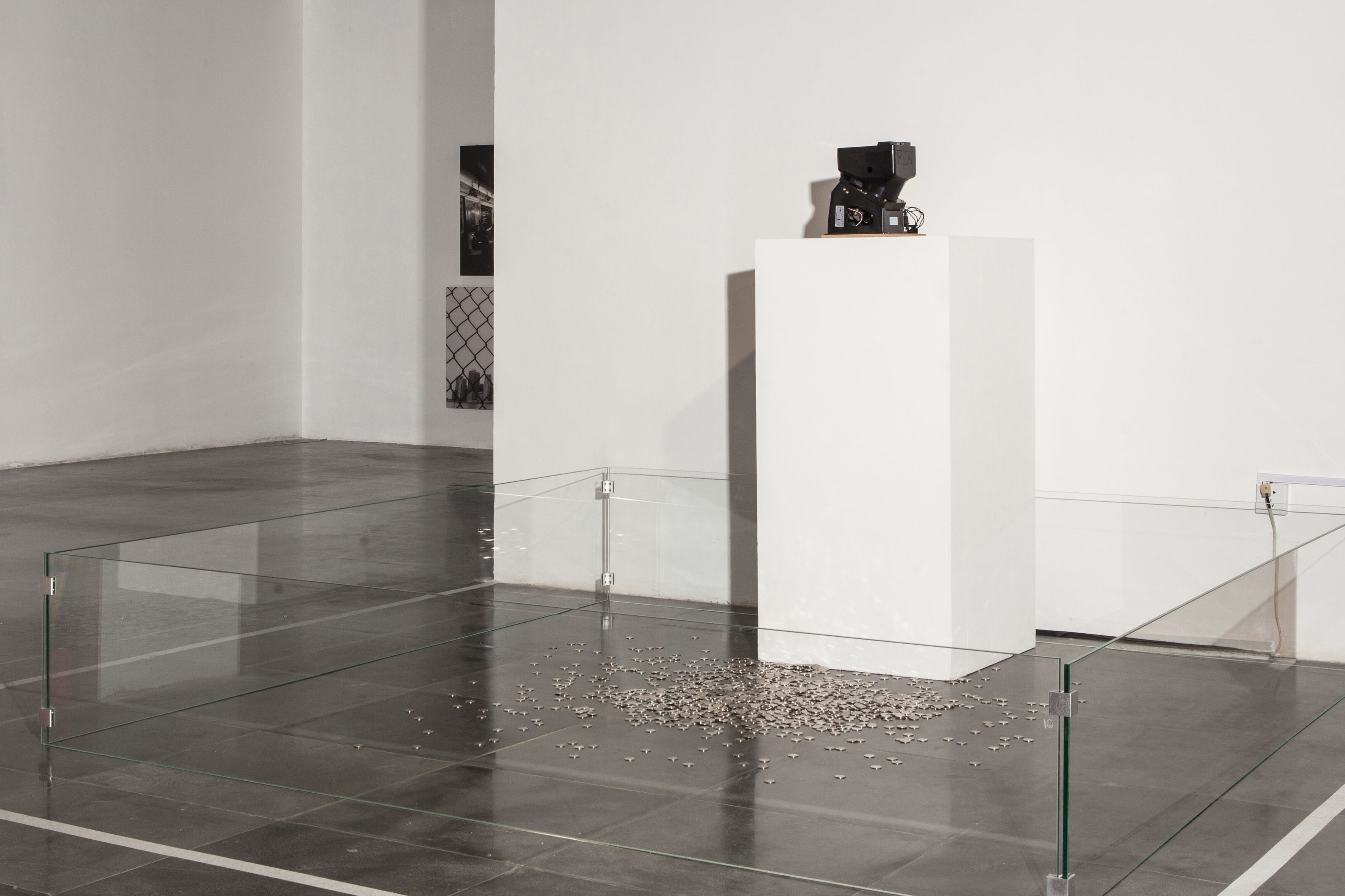
A coin-dispensing mechanism, salvaged from an arcade machine and driven by a PLC (programmable logic controller), ejects a single 1-yuan coin every two minutes. It runs eight hours a day on a fixed schedule; after one month, the total amount it has dispensed equals my monthly salary at the time.
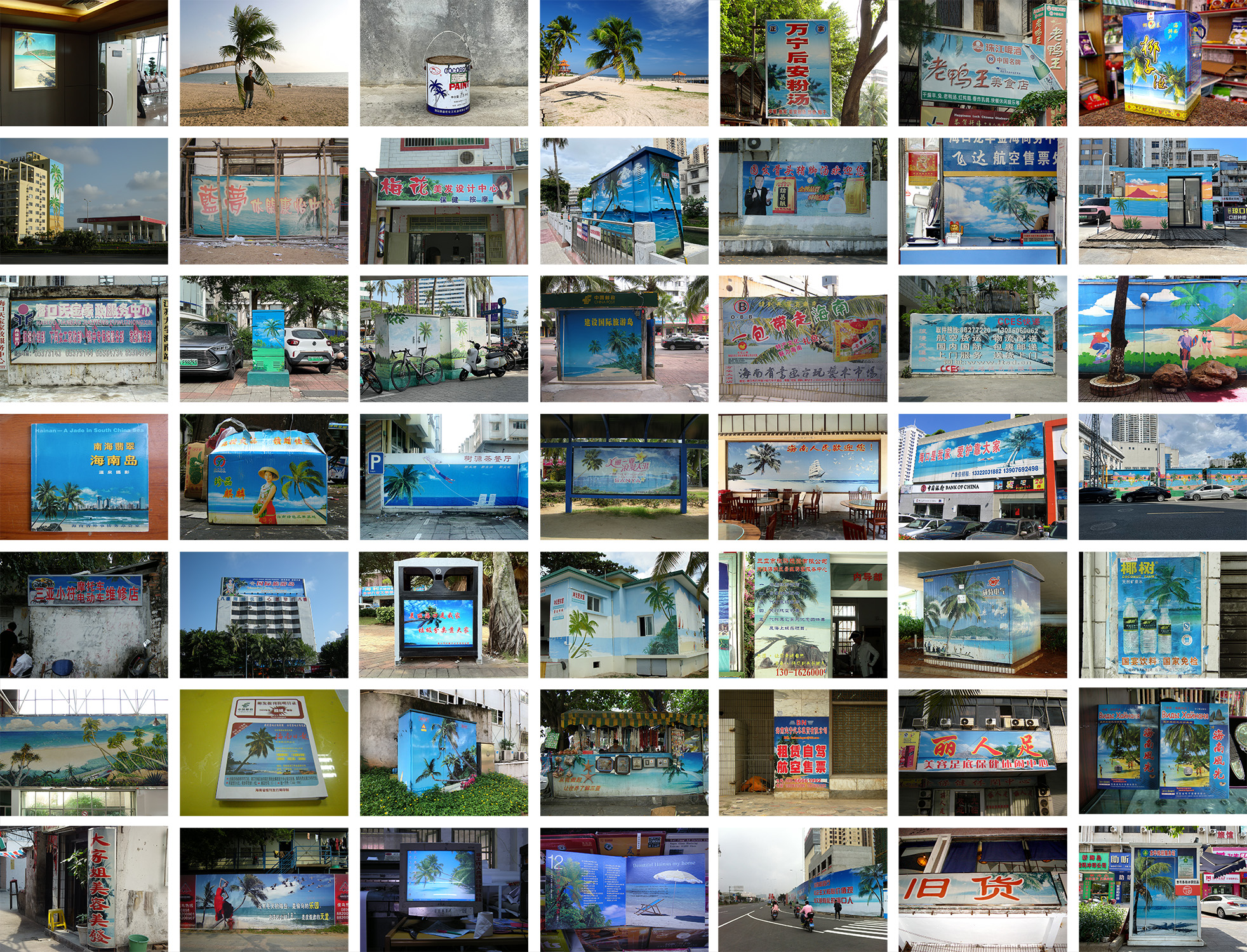
In Hainan one often sees coconut trees that lean and bend, locally known as “crooked-necked coconut trees” or “bent coconut trees.” Their tilt has a real physical cause: phototropism, the tree’s own weight, soil conditions, and frequent typhoons together bend the young trunk, so that many trees grow leaning toward the sea. Yet this naturally bent tree was, very early on, reclassified by another kind of gaze. As early as the 19th century, Western plant hunters already listed the coconut palm as a core element of the “tropical paradise.” As an emblem of seaside holidays, the “bent coconut tree” populates postcards from the Maldives, Hawaii, and the Seychelles.
In 1988 Hainan became a province and the largest Special Economic Zone in China, and the “bent coconut tree” rapidly entered public view as the visual sign of the tropical island. It first appeared in travel-agency advertisements, where the seaward-leaning tree carried tourists’ imagination of leisure life on a tropical island. Soon after, the poet Haizi’s line “Facing the sea, with spring blossoms” was widely appropriated by commercial advertising, further reinforcing the image. As tourism and real estate expanded, developers began transplanting “bent coconut trees” into residential compounds to manufacture an island atmosphere; in scenic areas, the same tree became the standard backdrop for tourist photographs.
What is striking is that the sign then began to detach from tourism altogether, drifting into barbershops, pharmacies, auto-repair shops and other contexts. Its signified multiplied accordingly: on a barbershop signboard, fronds swaying in the sea breeze are mobilised to suggest the freshness of a new haircut. The combination of “blue sky, sea, palm, sand” thus congeals into a visual template for tropical leisure — a “simulacrum” in Jean Baudrillard’s sense, an image that, through endless representation and reproduction, replicates itself and no longer refers to any real coconut tree, only to itself. In Haikou today, this image is reproduced en masse on the distribution rooms and fibre-optic junction boxes scattered across the city’s power grid. Through the appropriation and evolution of this single visual sign, Hainan Island has been re-figured as a tropical seaside destination, shifting from “the End of the Earth” to an “International Tourism Island.”
In the cartoon series McDull, illustrated by Alice Mak and written by Brian Tse, McDull is a little pig who lives with his mother, Mrs. Mak, in Tai Kok Tsui, Hong Kong. McDull’s greatest dream is to reach the paradise of the Maldives, with its blue sky, coconut groves, clear water and white sand. One day, Mrs. Mak finally takes him on his “trip to the Maldives” — except that what she takes him to is an amusement park assembled out of tropical landscapes, where the cable-car station passes for an airport and the aquarium stands in for the Indian Ocean. There, McDull realises his greatest dream. This is the moment the simulacrum operates most completely: once the sign is more “real” than the real, whether the actual Maldives is present no longer matters.
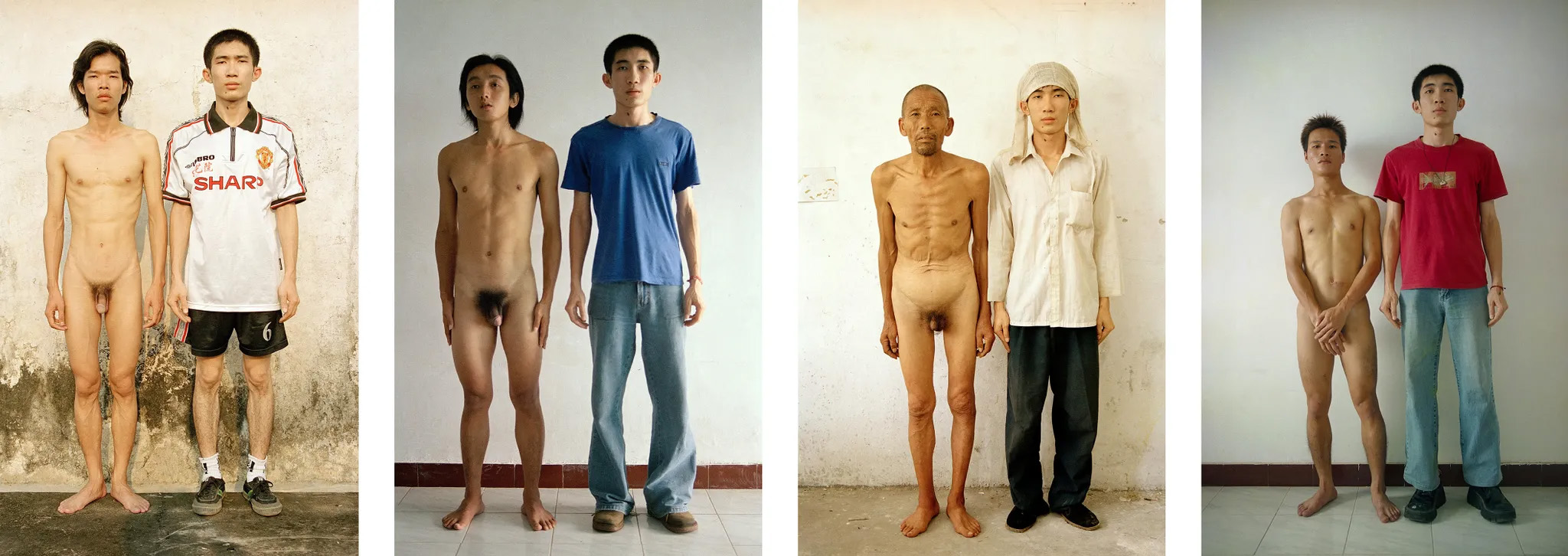
Wearing everything a participant has on — clothes, headscarf, accessories, shoes — then posing for a photograph with them.
CV
Selected Group Exhibitions
About
Huang Xuebin (b. 1979, Wenchang, Hainan) lives and works in Haikou. His practice operates between everyday objects — a SIM ejector, an eraser, coins, thermal paper, the image of a coconut tree — staging brief, irreversible encounters in which two already-named, already-used things meet in a single act: an adhesion, an inversion, a substitution. The act is small and often nearly weightless, yet it requires each object to be pulled out of its functional and semantic order and made to carry an event it was never meant to carry.
He does not supply a reading for the event, nor does he allow a work to close around a stated “subject.” Each piece is left as an unresolved equation: the relation between the two objects is opened, but not filled in. What remains — how the work is seen, how it is remembered, how it rubs against a viewer’s prior experience — is the part of the equation that goes on computing outside the work.
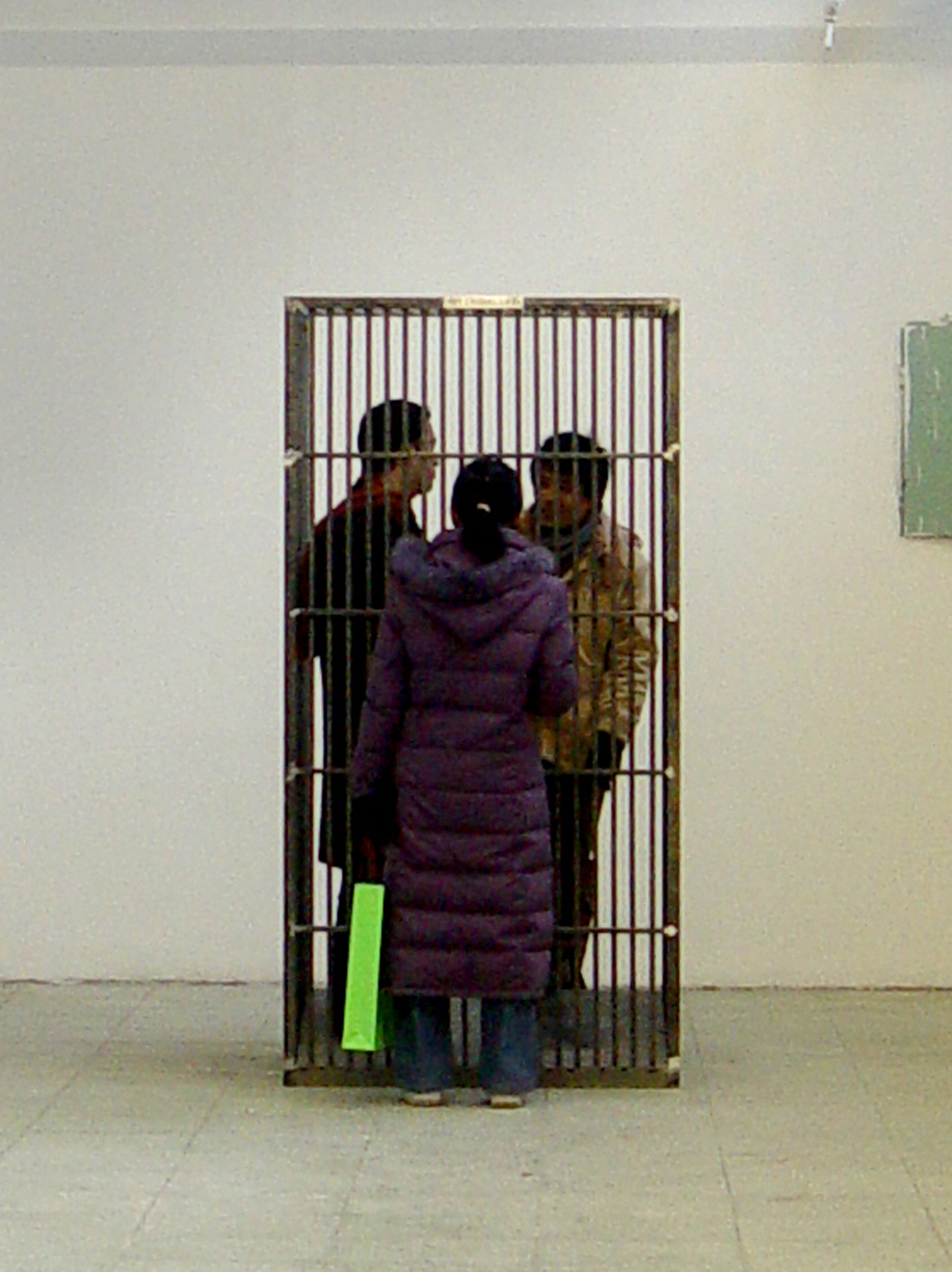
Since 2000 he has worked in this way across installation, event, image, and documentation — from Interrogation Room to Salary, The Tower of Babel, Object Boomerangs, and the ongoing SKU series. The works share no common subject, only a single discipline: to leave, between an object’s use and its interpretation, a minimal residue that cannot be recovered.